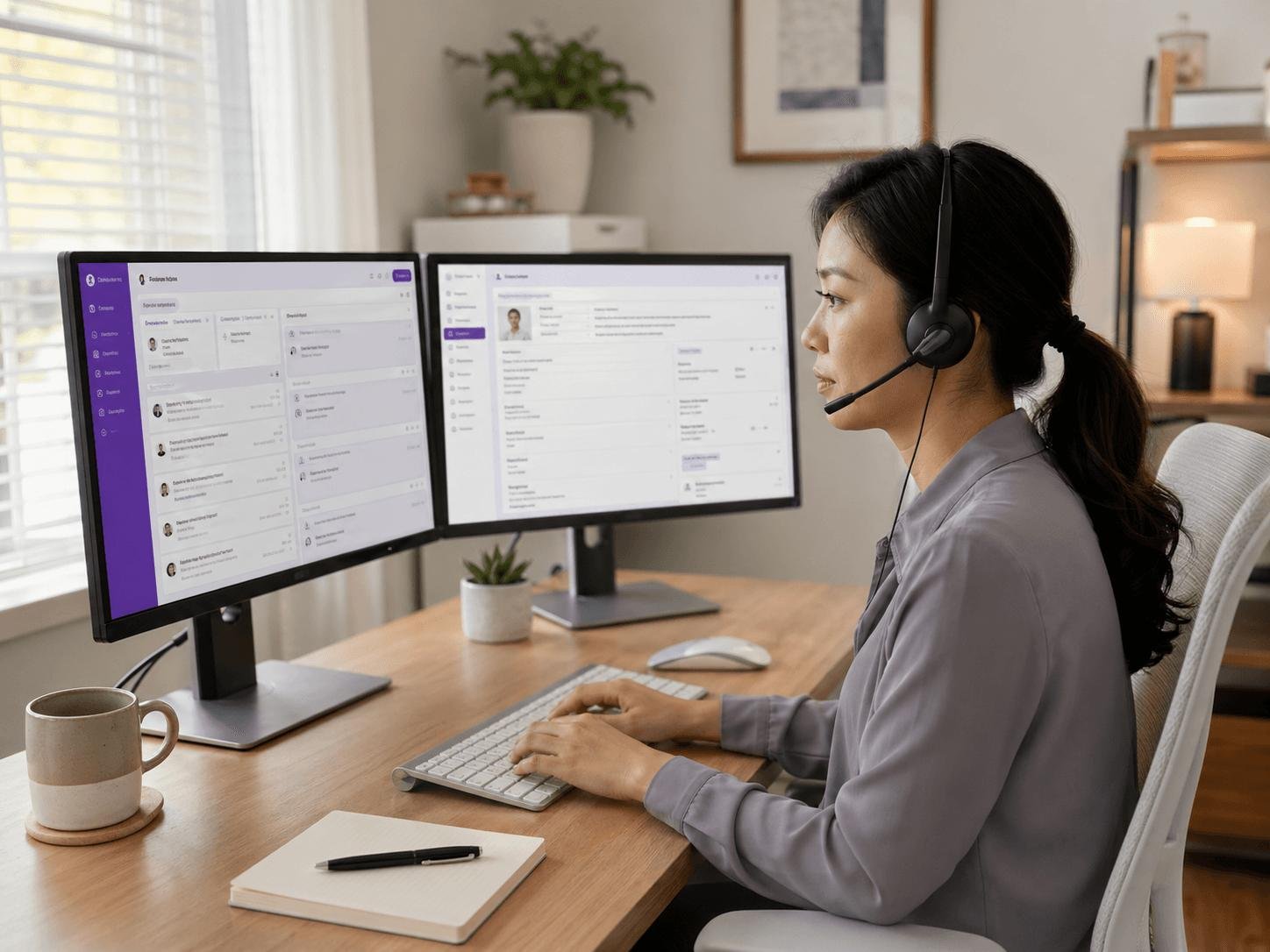
A bilingual virtual medical assistant helps healthcare providers overcome these challenges by offering remote administrative and patient communication support in two languages. From answering incoming calls to scheduling appointments and handling routine inquiries, bilingual assistants help medical practices create a more accessible and organized patient experience.
For clinics, private practices, and healthcare facilities, this support can improve communication while allowing in-house staff to focus on essential responsibilities.
In this article
- What Is a Bilingual Virtual Medical Assistant?
- How Does Bilingual Medical Support Improve Patient Experience?
- What Is the Difference Between a Bilingual Medical VA and a Medical Answering Service
- How to Choose the Right Bilingual Virtual Medical Assistant
- Why Your Practice Should Consider Bilingual Virtual Medical Receptionist Services
- Improve Patient Support with a Bilingual Virtual Medical Assistant
- Conclusion
- Frequently Asked Questions
What Is a Bilingual Virtual Medical Assistant?
A bilingual virtual medical assistant is a remote professional who supports healthcare practices by managing administrative and patient communication tasks in two languages.
Unlike a general bilingual virtual assistant, a medical-focused professional understands healthcare office workflows, appointment coordination, patient interactions, and medical administrative terminology.
Depending on the agreed responsibilities, a bilingual medical VA can assist with:
- Answering incoming patient calls in two languages.
- Scheduling, confirming, and rescheduling appointments.
- Sending appointment reminders and follow-up messages.
- Managing voicemail and routing patient inquiries.
- Collecting basic patient information through approved procedures.
- Coordinating administrative requests and referrals.
- Providing general information about office hours and services.
Learn more about our bilingual answering service and how it supports multilingual patient communication.
How Does Bilingual Medical Support Improve Patient Experience?
Language plays an important role in healthcare communication. Patients may feel more comfortable discussing appointments and administrative concerns when they can communicate in their preferred language.
Here are four ways bilingual virtual medical receptionist services can benefit patients and healthcare providers.
1. Better Communication with Patients
A bilingual medical answering service allows patients to communicate with someone who understands their preferred language. Assistants can answer routine administrative questions, explain appointment procedures, and direct inquiries to the appropriate department.
Clearer communication can help reduce misunderstandings and create a more welcoming experience.
2. Convenient Appointment Scheduling
Patients often call medical offices to book appointments, confirm visits, or request schedule changes. A bilingual assistant can manage these requests and communicate appointment details according to the practice’s scheduling procedures.
Explore our virtual medical receptionist services for additional support with appointment management and patient communication.
3. More Accessible Patient Support
Healthcare practices serving multilingual communities need communication processes that accommodate different language preferences.
A bilingual answering service can help bridge this gap by providing consistent support in the languages agreed upon with the provider.
Our medical office answering service also helps practices manage incoming calls, patient messages, and routine administrative inquiries.
4. Reduced Administrative Workload
Front-desk employees frequently manage calls, appointment requests, and patient inquiries simultaneously. A remote assistant can handle designated administrative responsibilities, helping in-house teams manage their workload more effectively.
What Is the Difference Between a Bilingual Medical VA and a Medical Answering Service?
Although these services overlap, they are not exactly the same.
A bilingual medical answering service primarily focuses on handling incoming calls, recording messages, and directing patient inquiries.
A bilingual medical VA can provide broader administrative assistance, including appointment management, follow-up communication, patient intake coordination, and other agreed responsibilities.
Medical practices should select the service based on their patient communication requirements, call volume, and daily administrative workload.
How to Choose the Right Bilingual Virtual Medical Assistant
Selecting the right professional requires more than checking language proficiency. Healthcare providers should consider several important factors:
- Language skills: Ensure the assistant communicates confidently and accurately in both required languages.
- Healthcare experience: Look for familiarity with medical office operations and patient-facing administrative responsibilities.
- Professional communication: Choose someone who can handle patient inquiries politely and professionally.
- Technology compatibility: Confirm experience with your scheduling software, communication platforms, and relevant practice management systems.
- Privacy and security: For U.S. healthcare practices, evaluate applicable HIPAA requirements, access controls, security procedures, and Business Associate Agreement arrangements where required.
Learn more about HIPAA-compliant virtual assistant support and the importance of privacy-conscious healthcare workflows.
It is also important to establish clear procedures for handling sensitive information and escalating medical concerns to qualified healthcare professionals.
Why Your Practice Should Consider Bilingual Virtual Medical Receptionist Services
Bilingual virtual medical receptionist services offer a flexible way to support patients while improving administrative coordination.
Whether your practice needs assistance with incoming calls, appointment scheduling, patient reminders, or multilingual communication, a dedicated virtual assistant can complement your existing team.
The right support arrangement can help improve accessibility, organize front-desk workflows, and provide patients with a more consistent communication experience.
Improve Patient Support with a Bilingual Virtual Medical Assistant
Every patient deserves professional, respectful, and understandable communication. With the right bilingual virtual medical assistant, healthcare providers can make everyday interactions more convenient while supporting the needs of multilingual patient communities.
If your practice is looking to improve call handling, appointment coordination, and patient communication, consider adding dedicated bilingual virtual support to your operations.
Ready to strengthen your patient support? Contact Virtual Assistant Medical today to explore bilingual virtual assistant services designed around your medical practice’s needs.
Virtual Assistant Medical
Give Your Dental Front Desk More Breathing Room
See how VAM can support dental scheduling, patient reminders, and routine office administration.

Conclusion
A bilingual virtual medical assistant helps healthcare practices improve patient communication, simplify appointment scheduling, and provide accessible support to multilingual communities. By reducing administrative workload and creating a smoother patient experience, bilingual virtual support allows medical teams to focus more on quality patient care. Contact us today to find the right virtual assistant solution for your practice.
Frequently Asked Questions
1. What Does a Bilingual Virtual Medical Assistant Do?
A bilingual virtual medical assistant provides remote administrative support in two languages. Common responsibilities include answering patient calls, scheduling appointments, sending reminders, managing inquiries, and coordinating administrative requests.
2. Can a Bilingual Medical VA Handle Patient Calls?
Yes. A trained bilingual medical VA can answer incoming calls, assist with routine inquiries, schedule appointments, take messages, and direct clinical concerns to qualified healthcare professionals.
3. What Languages Can a Bilingual Medical Assistant Support?
Language availability depends on the service provider. English and Spanish are common requirements in many U.S. healthcare settings, but practices can discuss other language needs when selecting a provider.
4. How Is a Bilingual Answering Service Different from a Regular Answering Service?
A regular answering service may primarily record and forward messages. A bilingual answering service additionally provides communication in two supported languages, making it more suitable for multilingual patient communities.
5. Are Bilingual Virtual Medical Assistants HIPAA Compliant?
HIPAA compliance depends on the services performed and the handling of protected health information. Healthcare providers should assess the assistant’s security procedures, contractual arrangements, access permissions, and applicable Business Associate Agreement requirements.
6. Can a Bilingual Virtual Assistant Help with Appointment Scheduling?
Yes. Depending on system access and assigned responsibilities, a bilingual virtual assistant can schedule, confirm, and reschedule appointments, as well as send patient reminders and communicate routine scheduling updates.